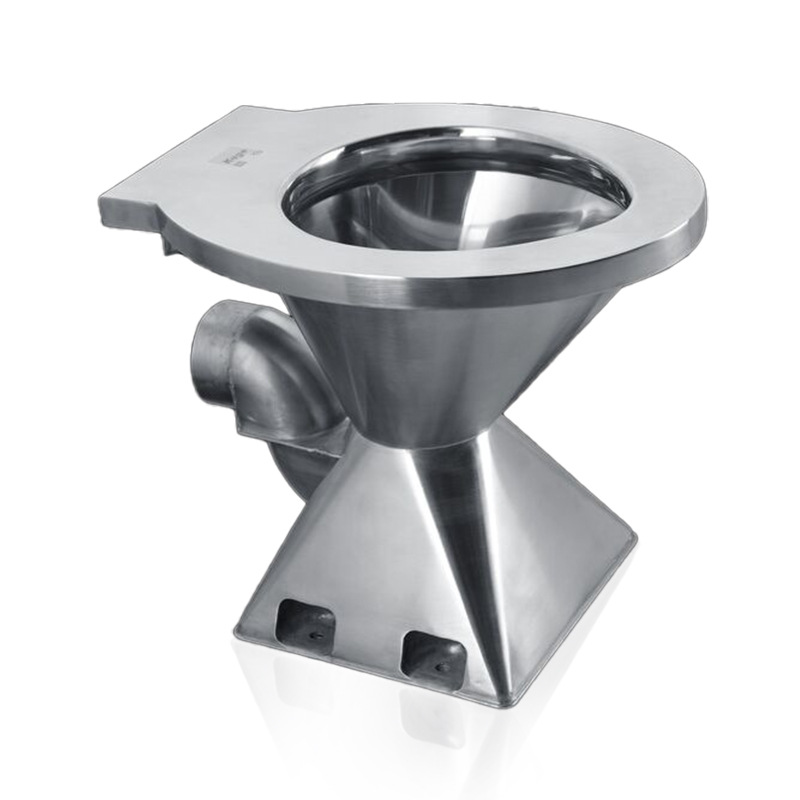
In modern bathroom design, stainless steel toilets are becoming increasingly popular due to their durability, hygiene, and aesthetic appeal. When selecting a stainless steel toilet, consumers often face a key decision: should they choose a concealed cistern design or a flush valve system? This article provides a thorough analysis of the advantages and disadvantages of both systems to help you make an informed choice.
I. Concealed Cistern System
1. Working Principle and Structural Features
The concealed cistern system completely embeds the water tank within the wall or the toilet structure, exposing only the flush button or panel. This design typically operates on the principle of gravity flushing, relying on the release of a stored volume of water in the cistern to complete the flush.
2. Main Advantages
- Aesthetics: The concealed design gives the bathroom a cleaner, more modern look, with no exposed tank or pipes.
- Noise Reduction: The cistern is embedded in the wall or toilet structure, effectively reducing flushing noise.
- Flushing Stability: Each flush uses a fixed amount of water (usually a dual-flush design of 6/3 liters), ensuring stable and reliable performance.
- Easy Maintenance: Most concealed cisterns have an access panel for easy servicing of internal components.
- Space Efficiency: Saves bathroom space, making it particularly suitable for small apartments or minimalist designs.
3. Potential Disadvantages
- Complex Installation: Requires early planning during renovation, with sufficient wall space and reinforcement needed.
- Higher Initial Cost: More expensive than traditional exposed cistern systems.
- Maintenance Limitations: Although designed with access panels, some complex issues may require partial wall demolition.
- Water Pressure Dependency: May lack sufficient flushing power in low-pressure environments, requiring additional booster devices.
II. Flush Valve System
1. Working Principle and Structural Features
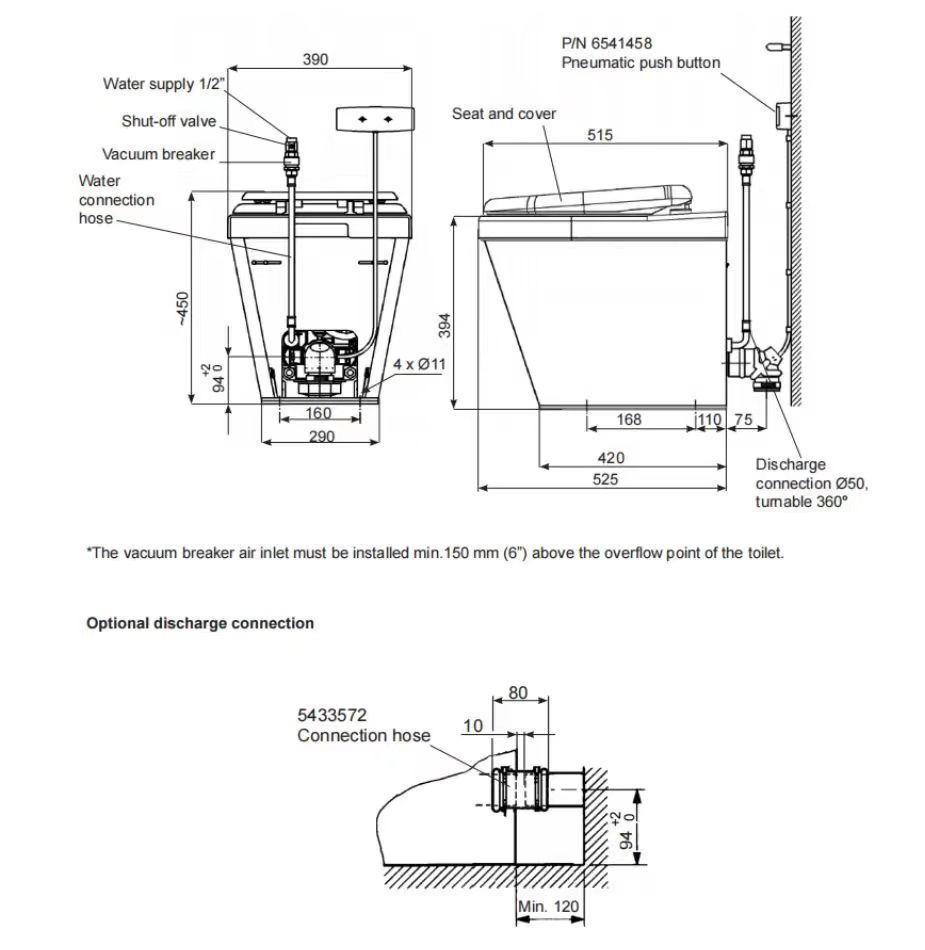
The flush valve system (also known as a pressure-flush system) connects directly to the building's water supply network, using pipeline water pressure to release a large volume of water instantly for flushing. This system does not require a water storage tank and is controlled by a solenoid or mechanical valve.
2. Main Advantages
- Powerful Flush: Utilizes direct pipeline pressure, typically delivering stronger flushing power and better cleaning performance.
- Water-Saving Potential: Advanced flush valves can provide water on demand, avoiding the waste of fixed water volumes.
- Space-Saving: Completely eliminates the need for a cistern, resulting in a more compact toilet structure.
- Unlimited Continuous Use: Unlike cisterns that require refill time, suitable for high-frequency usage locations.
- Flexible Installation: Can be installed later in the renovation process without pre-planning for a cistern location.
3. Potential Disadvantages
- Higher Noise Levels: High-pressure water flow produces noticeable noise, especially in quiet environments.
- Water Pressure Dependency: Performance significantly declines in low-pressure environments, potentially requiring a booster pump.
- Cost Issues: High-quality flush valves are expensive and require professional installation.
- Maintenance Requirements: Precision internal components may need regular servicing, with higher repair costs.
- Temperature Sensitivity: In cold climates, directly connected pipes may cause the toilet surface to become excessively cold.
III. Key Factor Comparison
1. Flushing Performance
- Concealed Cistern: Provides stable and reliable flushing performance, but power is limited by gravity.
- Flush Valve: Offers stronger flushing power, especially effective for stubborn waste, but requires adequate water pressure.
2. Water Efficiency
- Concealed Cistern: Modern dual-flush designs (6L/3L) are already quite water-efficient.
- Flush Valve: Theoretically more water-efficient, as water volume can be adjusted based on need, but depends on user habits.
3. User Experience
- Concealed Cistern: Quiet operation, consistent button feel, psychologically closer to traditional usage habits.
- Flush Valve: May produce operational noise but responds instantly without waiting for tank refill.
4. Installation Requirements
- Concealed Cistern: Requires early planning during renovation, with walls needing 18-25cm of thickness.
- Flush Valve: Less dependent on installation timing but requires assessment of building water pressure.
5. Long-Term Maintenance
- Concealed Cistern: Internal part replacement is relatively simple and low-cost.
- Flush Valve: Precision valve repairs may require professionals, with higher part costs.
IV. Recommended Usage Scenarios
Concealed Cistern is More Suitable For:
- Residential environments, especially home bathrooms where noise reduction and aesthetics are priorities.
- Buildings with unstable or low water pressure.
- Renovation projects pursuing minimalist design styles.
- Users who prefer traditional flushing methods.
Flush Valve System is More Suitable For:
- Public or commercial spaces, such as hotels and office buildings with high-frequency usage.
- Buildings with stable and sufficient water pressure.
- Extremely space-limited locations where a cistern cannot be accommodated.
- Users who prioritize maximum flushing power and instant availability.
 V. Future Development Trends
- Smart Hybrid Systems: New-generation products combining cistern storage and pressure assistance are emerging.
- Waterless/Minimal-Water Technologies: Some innovative designs aim to reduce or eliminate flushing needs.
- Material Advancements: More durable stainless steel alloys and surface treatments are improving product lifespan.
- IoT Integration: Deep integration of flushing systems with smart building management.