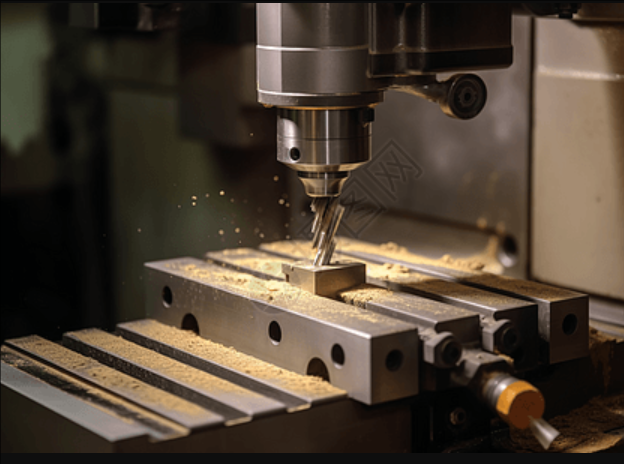
1. Overview of CNC Lathe Machining
CNC (Computer Numerical Control) lathes are precision machine tools controlled by digital programs, primarily used for machining rotational parts such as shafts, discs, and sleeves. Compared to conventional lathes, CNC lathes offer advantages such as high precision, efficiency, and automation, making them widely used in industries like automotive, aerospace, and medical devices.
2. CNC Lathe Machining Process
2.1 Pre-Machining Preparation
(1) Drawing Analysis and Process Planning
- Analyze part drawings to clarify technical requirements such as dimensions, tolerances, and surface finish.
- Determine the machining sequence (roughing → semi-finishing → finishing).
- Select appropriate tools, fixtures, and cutting parameters.
(2) Programming (CAM Software or Manual Programming)
- Manual Programming: Suitable for simple parts (e.g., G-code programming).
- CAM Software Programming (e.g., Mastercam, UG, SolidCAM):
- Import 3D models and set toolpaths.
- Generate G-code and simulate to avoid collisions or overcutting.
(3) Workpiece Fixturing
- Three-Jaw Chuck: Suitable for regular rotational parts.
- Four-Jaw Chuck: Used for irregular or eccentric workpieces.
- Center Support: Long shaft parts require tailstock support.
- Custom Fixtures: Improve positioning accuracy for mass production.
2.2 Machining Stages
(1) Rough Machining
- Objective: Rapid material removal for efficiency.
- Tool Selection: Carbide roughing tools (e.g., CNMG inserts).
- Cutting Parameters:
- Low speed (500-1500 RPM), high feed (0.2-0.5 mm/rev), deep cut (2-5 mm).
(2) Semi-Finishing
- Objective: Shape correction, leaving 0.2-0.5 mm for finishing.
- Tool Selection: Coated inserts (e.g., TiAlN coating) for better wear resistance.
- Cutting Parameters:
- Medium speed (1500-3000 RPM), moderate depth of cut (0.5-2 mm).
(3) Finishing
- Objective: Achieve final dimensions and surface quality (Ra 1.6μm or better).
- Tool Selection: Diamond or CBN inserts for high surface finish.
- Cutting Parameters:
- High speed (3000-6000 RPM), low feed (0.05-0.1 mm/rev), shallow cut (0.1-0.3 mm).
(4) Special Operations (Optional)
- Threading: Thread turning tools (e.g., 60° V-shaped inserts) or thread milling.
- Grooving/Cutting Off: Dedicated grooving tools (e.g., GTN inserts).
- Drilling/Boring: Performed using tailstock or live tooling.
2.3 Post-Machining Processes
- Deburring: Manual or vibratory polishing to remove sharp edges.
- Inspection:
- Calipers/Micrometers: Measure outer diameter and length.
- Profilometer: Check surface roughness.
- CMM (Coordinate Measuring Machine): Full dimensional inspection for complex shapes.
- Surface Treatment: Plating, anodizing, coating (as required).
3. Key Technical Considerations
3.1 Tool Selection and Management
- Material Matching:
- Steel: Carbide (WC-Co).
- Aluminum: PCD (Polycrystalline Diamond) tools.
- Stainless Steel: Coated carbide (e.g., TiCN).
- Tool Wear Monitoring: Regularly inspect edges to avoid quality degradation.
3.2 Cutting Parameter Optimization
- Cutting Speed (Vc): Affects tool life and surface finish.
- Feed Rate (f): Higher for roughing, lower for finishing.
- Depth of Cut (ap): Adjust based on machine rigidity and tool strength.
3.3 Cooling and Lubrication
- Wet Machining: Coolant (emulsion or oil-based) for cooling and lubrication.
- Dry Machining: Used in environmentally sensitive applications (e.g., graphite machining).
3.4 Fixturing and Positioning Accuracy
- Repeatability: Must be within ±0.01 mm.
- Hydraulic Fixtures: Improve efficiency in mass production.
4. Typical Applications
4.1 Automotive Components
- Crankshafts/Camshafts: High-precision turning + grinding.
- Wheel Bearings: Hard turning (replacing grinding).
4.2 Aerospace
- Turbine Blade Tenons: 5-axis turn-mill machining.
- Aircraft Aluminum Parts: High-speed machining (HSM).
4.3 Medical Devices
- Artificial Joints: Precision titanium turning.
- Surgical Instruments: Micron-level dimensional control.
5. Common Issues and Solutions
| Issue | Possible Cause | Solution |
|---|---|---|
| Dimensional Error | Tool wear/program error | Replace tool/check G-code |
| Poor Surface Finish | High feed/dull tool | Reduce feed/resharpen tool |
| Chatter (Vibration) | Incorrect parameters/loose fixture | Adjust speed/secure fixture |
| Chip Evacuation Issues | Low depth of cut/improper chip breaker | Increase depth/change tool |
6. Future Trends
- Smart Machining: AI-driven parameter optimization and real-time tool monitoring.
- Hybrid Machining: Turn-mill centers (e.g., Mill-Turn) to reduce setups.
- Green Manufacturing: Cryogenic machining, MQL (Minimum Quantity Lubrication).
7. Conclusion
CNC lathe machining is a core process in precision manufacturing, where efficiency and quality depend on process planning, tool management, and parameter optimization. With advancements in CNC technology and automation, CNC lathes continue to evolve toward higher precision, intelligence, and flexibility, meeting the demands of advanced manufacturing industries.