

Note: The current time is 11:09:37 on Saturday, July 19, 2025, Beijing Time (UTC+8).
In May this year, while Thailand's new car sales saw a modest 5% year-on-year increase, most Southeast Asian markets experienced declines. Indonesia's new car sales dropped by 15%, Malaysia's dipped slightly by 3%, and the Philippines saw a marginal 1% decrease. Notably, due to the downside risks posed by global trade uncertainties, GlobalData has revised its recent ASEAN light vehicle sales forecast downward by approximately 1%. It now predicts that ASEAN's light vehicle sales in 2025 will slightly decrease to 3.11 million units from 3.12 million in 2024.
Thailand's New Car Sales Rise 5% YoY in May
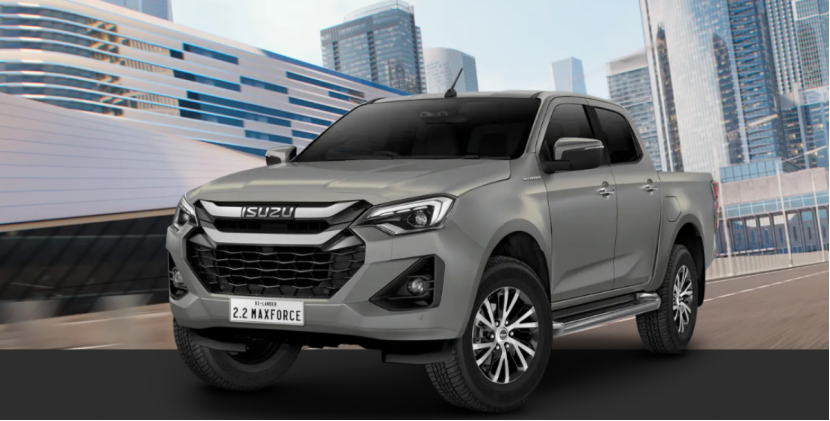
The Federation of Thai Industries (FTI) reported that Thailand's new car sales in May increased by 5% year-on-year to 52,229 units, rebounding from the sluggish performance of 49,871 units in the same period last year.
Image source: Isuzu
This marks the second consecutive month of growth for Thailand's new car sales, following two years of significant declines due to tightened credit standards by banks and auto finance companies in response to surging non-performing loans. High-debt consumers and small businesses faced financing difficulties, leading to a sharp drop in car sales. In 2024, Thailand's new car sales fell by 26% to 572,675 units, hitting a 15-year low.
The growth in May was primarily driven by strong sales of pure electric vehicles (EVs), largely attributable to Chinese automakers. According to data from Gasgoo Automotive Research Institute, China exported 9,873 passenger vehicles to Thailand in May, including 8,183 EVs. Under Thailand's EV3.0 investment incentive program, Chinese automakers are gradually increasing local production to replace imports. However, pickup truck sales in Thailand continued to decline sharply.
From January to May, Thailand's new car sales dipped by 3% year-on-year to 252,615 units, down from 260,365 in the same period last year. Pickup truck sales fell by 17% to 62,467 units, passenger pickup sales dropped by 7% to 15,365 units, internal combustion engine (ICE) passenger vehicle sales declined by 11% to 62,553 units, hybrid vehicle sales decreased by 6% to 55,374 units, while EV sales rose by 23% to 53,955 units.
Notably, the Thai government is considering introducing scrappage incentives to encourage pickup truck owners to trade in their old vehicles for new ones. Earlier this year, the government launched a 5-billion-baht loan guarantee program, set to run until year-end, to support local small and medium-sized enterprises (SMEs) in purchasing pickup trucks. However, the program's impact on pickup sales has been limited so far.
Surapong Paisitpatanapong, Vice Chairman of the FTI's Automotive Industry Club, expressed support for the scrappage incentive proposal, stating, "We support the pickup truck trade-in program, which could boost sales by 50,000 to 100,000 units. In fact, extending this measure to passenger vehicles would yield even better results."
Despite an 8% year-on-year drop in Thailand's vehicle production to 594,492 units from January to May, the country remains ASEAN's largest auto producer. However, due to weak overseas demand, intensified competition from Chinese automakers, and stricter carbon emission regulations in key markets, Thailand's vehicle exports fell by 10% to 390,095 units during the same period.
In May, the FTI revised its 2025 full-year vehicle production forecast downward to 1.4 million units, lower than the initial projection of 1.5 million. By comparison, Thailand produced 1.84 million vehicles in 2023. Additionally, automakers and parts suppliers are facing extra pressure from new U.S. import tariffs.
Indonesia's New Car Sales Drop 15% YoY in May
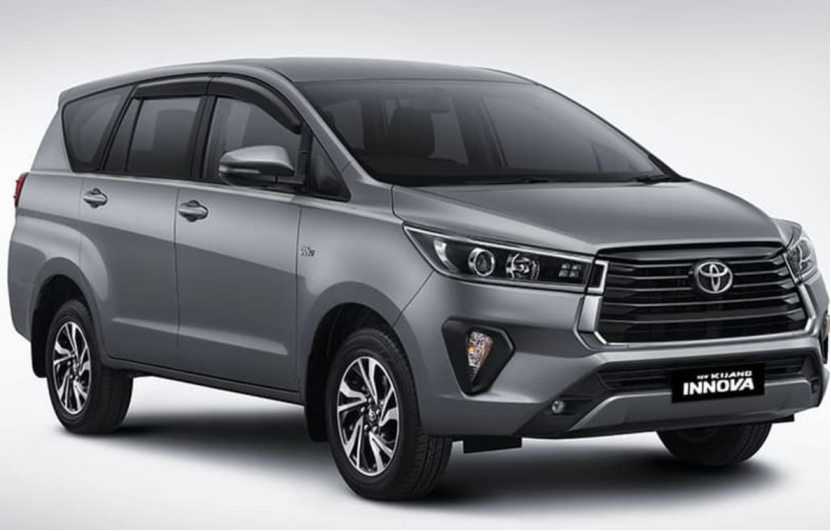
Wholesale data from the Indonesian Automobile Industry Association (Gaikindo) showed that new car sales in Indonesia fell by 15% year-on-year in May to 60,613 units, down from 71,391 in the same period last year. Compared to May 2024, which already reflected a 13% decline from post-pandemic peak levels, this year's performance was even weaker.
Image source: Toyota Motor
From January to May, Indonesia's new car sales decreased by 5.5% to 316,981 units (compared to a 21% plunge to 335,405 units in the same period last year). Passenger vehicle sales dipped by 5% to 248,897 units, while commercial vehicle sales dropped by over 6% to 68,084 units.
Among automakers, Toyota Motor's sales in Indonesia rose slightly by 2% to 106,027 units from January to May, driven by strong demand for newly launched models like the Hilux Rangga and Innova MPV. However, other Japanese automakers faced growing market pressure from Chinese brands, which are fueling EV demand in Indonesia. Daihatsu's sales fell by 22% to 55,049 units, Honda's dropped by 29% to 28,502 units, Mitsubishi's declined by 13% to 26,028 units, and Suzuki's decreased by 22% to 22,240 units.
In terms of powertrains, Indonesia's EV sales surged nearly twofold to 30,152 units in the first five months of 2025. BYD and its Denza brand collectively sold 15,978 units, SAIC-GM-Wuling sold 4,735 units, and Chery/Omoda sold 4,081 units.
Indonesia's total vehicle production edged down by 1.4% to 466,290 units from January to May, while vehicle exports grew by over 7% to 192,501 units.
With market confidence significantly weakened over the past year, consumer willingness to purchase big-ticket items has declined, and businesses are grappling with growing international trade uncertainties due to recent U.S. tariff hikes. Jongkie Sugiarto, Vice Chairman of Gaikindo, noted, "The weakening purchasing power for new cars has become the main reason for Indonesia's continued decline in auto sales."
In the first quarter of 2025, Indonesia's GDP growth slowed slightly to 4.9% year-on-year, down from 5.0% in the previous quarter, dragged down by sluggish domestic consumption and exports.
In May, Indonesia's central bank cut its benchmark interest rate for the third time since peaking at 6.25% in August 2024, lowering it to 5.50% from 5.75% in February.
Gasgoo's data also revealed that China exported 9,145 passenger vehicles to Indonesia in May, including 5,902 EVs.
Malaysia's New Car Sales Dip 3% YoY in May
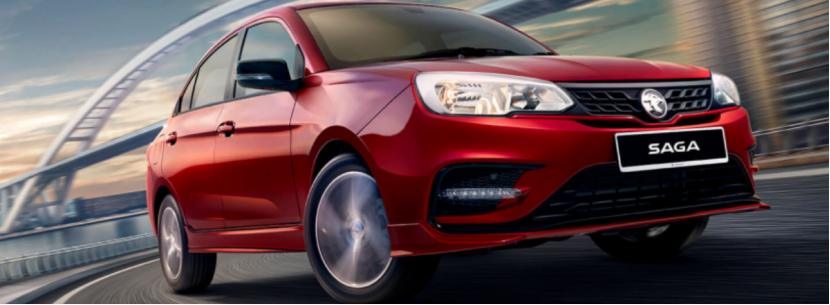
Registration data from the Malaysian Automotive Association (MAA) showed that new car sales in Malaysia slipped by 3% year-on-year in May to 68,007 units, down from 70,254 in the same period last year.
Image source: Proton
Economic data indicated that Malaysia's GDP growth slowed to 4.4% year-on-year in Q1 2025, down from a revised 4.9% in Q4 2024, primarily due to weaker export growth and slightly softer domestic consumption. Notably, Malaysia's central bank has kept its benchmark interest rate unchanged at 3.0% for two consecutive years.
From January to May, Malaysia's auto sales fell by 5% year-on-year to 316,737 units, down from a record 333,309 in the same period last year. Light passenger vehicle sales declined by 3% to 295,213 units, while commercial vehicle sales plummeted by 23% to 21,524 units.
In terms of powertrains, Malaysia's EV sales surged by 59% to 13,871 units in the first five months, driven by strong performances from Chinese EV makers BYD and Denza, as well as robust demand for Proton's recently launched e.MAS 7 model. BYD and Denza collectively sold 4,880 units, Proton's e.MAS 7 contributed 3,400 units, and Tesla sold 1,810 units.
Among automakers, Perodua, Malaysia's largest carmaker, saw its domestic sales dip by 1.5% to 143,860 units from January to May, slightly outperforming the overall market. Proton's global sales fell by nearly 4% to 60,187 units (including 1,327 export vehicles). The Saga remained Proton's best-selling model with 26,511 units, followed by the X50 compact SUV (based on Geely's platform) with 9,704 units, and the S70 sedan (also Geely-based) with 7,944 units.
Proton confirmed in late February that it had begun CKD production of the Saga at its Egypt plant to supply the North African market.
Malaysia's total vehicle production dropped by 12% to 299,886 units from January to May.
Gasgoo's data showed that China exported 14,549 passenger vehicles to Malaysia in May, including 2,378 EVs. Preliminary statistics revealed that Geely Auto led China's passenger vehicle exports to Malaysia in May with 7,639 units, followed by Chery Auto (4,163 units), BYD Auto (950 units), Jiangsu Yueda Kia (480 units), and Tesla (313 units).
From January to May, Geely Auto (28,099 units), Chery Auto (15,183 units), BYD Auto (6,793 units), Jiangsu Yueda Kia (4,200 units), and Tesla (2,611 units) remained the top five Chinese automakers exporting passenger vehicles to Malaysia.
Philippines' New Car Sales Edge Down 1% YoY in May
Wholesale data from the Chamber of Automotive Manufacturers of the Philippines (CAMPI) and the Truck Manufacturers Association (TMA) showed that new car sales in the Philippines fell by 1.2% year-on-year in May to 39,775 units, down from 40,271 in the same period last year.
Image source: Toyota Motor
This marked the second year-on-year decline in Philippine auto sales this year, following three consecutive years of strong post-pandemic recovery.
Macroeconomic data showed that the Philippines' GDP grew by 5.4% year-on-year in Q1 2025, slightly up from a revised 5.3% in Q4 2024, supported by stronger domestic consumption, export growth, and lower interest rates. In June, the Philippine central bank cut its benchmark rate by another 25 basis points to 5.25%, significantly lower than last year's peak of 6.5%, to bolster economic growth.
Michael Ricafort, Chief Economist at Rizal Commercial Banking Corporation, noted, "Recent Philippine auto sales have been weighed down by weaker domestic consumption and business confidence, as trade wars are expected to impact global trade, investment, employment, and the world economy."
From January to May, the Philippines' cumulative auto sales rose slightly by 1.7% to 190,429 units (up from 187,191 in the same period last year). Commercial vehicle sales grew by 10% to 151,704 units, while passenger vehicle sales plunged by 21.3% to 38,725 units.
Separate industry data showed that EV sales in the Philippines reached 10,433 units from January to May, including 8,536 hybrids, 1,779 EVs, and 118 plug-in hybrids. However, this figure does not cover all brands, including some mainstream Chinese automakers. Last year, the Philippine government extended its EO12 zero-tariff incentive program to 2028 and expanded it to include hybrids, not just pure EVs.
Japanese brands dominated the Philippine market. Toyota's sales rose by 6% to 91,652 units from January to May, boosted by the newly launched entry-level Hilux Tamaraw. Mitsubishi ranked second with 36,613 units (up 4%), followed by Nissan (9,879 units, down 14%), Suzuki (8,913 units, up 12%), and Ford (8,559 units, down 30%).