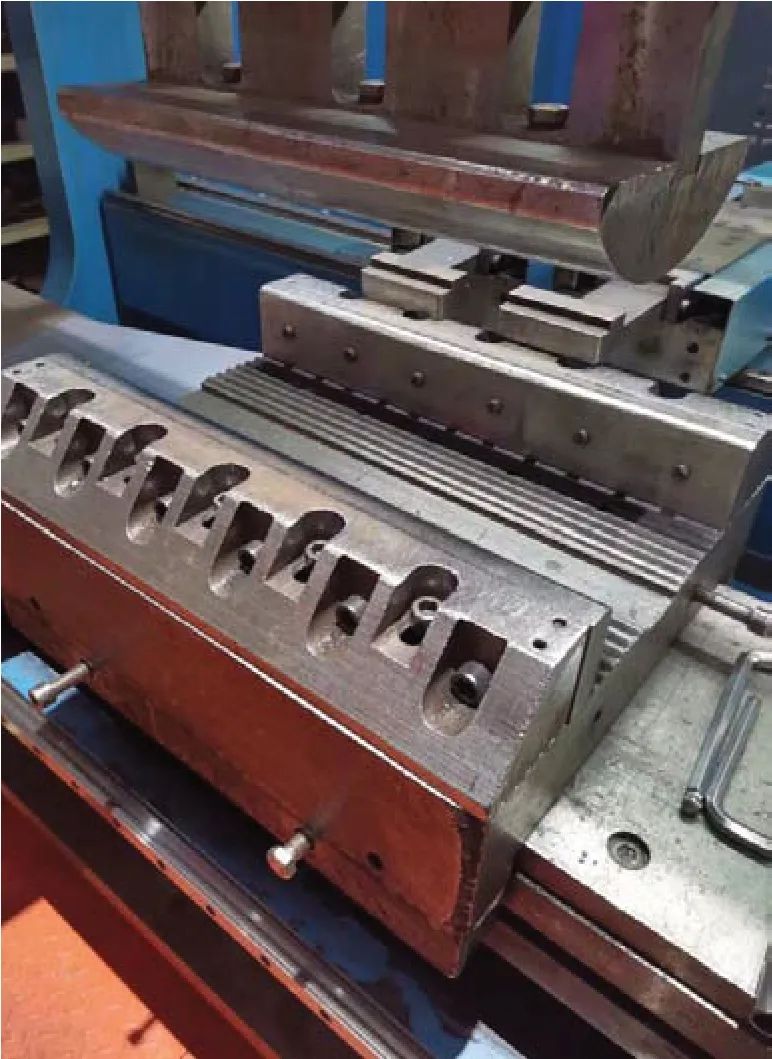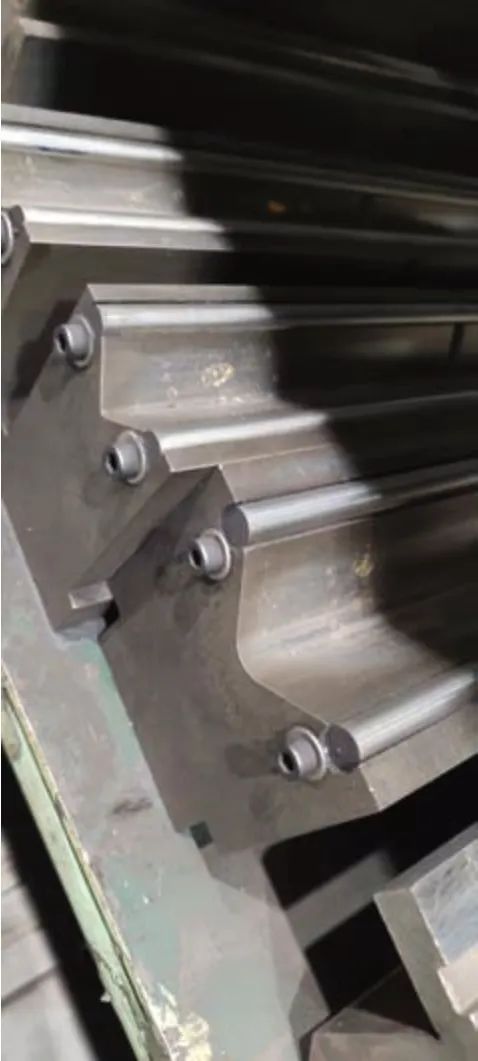
Sheet metal fabrication Processing is mainly based on the plastic characteristics of the metal material itself to implement the shape of the plate deformation of a means of processing, the processing object is generally medium-thin plate, involving a myriad of technology. Among the various processing methods in Metal forming, the bending process is very widely used, and sheet metal bending and forming process is also a hot topic of industry research. Sheet metal bending and forming process not only has a direct impact on the enterprise production plan, but also related to the economic benefits of enterprises, but in the implementation of sheet metal bending and forming process, there are often some defects, resulting in the quality of sheet metal bending and forming process problems, and cause a waste of resources, so this paper focuses on these common defects to explore, and to develop effective solutions to prevent, so as to ensure that the sheet metal bending and forming process is used in a variety of processing methods. Thus, this paper focuses on these common defects, and develops effective solutions to prevent them, thus ensuring the smooth progress of sheet metal bending and forming process in Metal fabrication.
The main working principle of sheet metal bending and forming
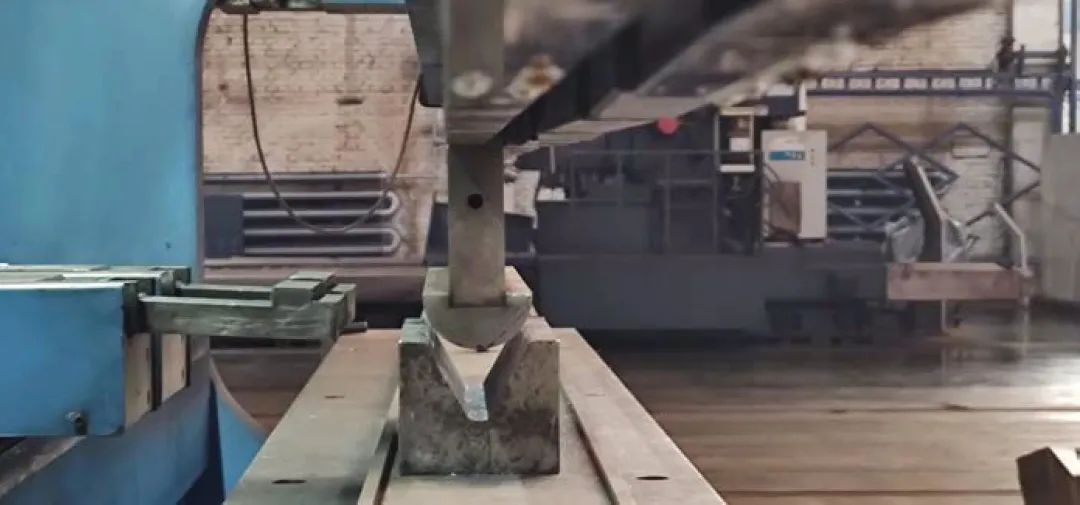
Sheet metal bending and forming is a processing method to realize bending and forming of sheet metal by applying external force to the sheet metal. Bending generally includes free bending and depression bending, through the upper mold displacement of the equipment adjusted to a certain height, the plate according to the angle marked on the drawings to complete the bending deformation, this deformation process is the free bending; so that the upper mold displacement of the equipment to the lowest, the required processing of the plate in the equipment between the upper and lower mold for the folding pressure, this process is the depression bending, the depression bending of the upper and lower molds required as Figure 1 shown in Figure 1. Generally speaking, the free bending process method on the machine tool equipment and mold requirements are relatively low, but the bending of the material products show a variety of characteristics, so this process is one of the main applications of sheet metal bending and forming process technology.
Sheet metal bending and forming process common defects and cause analysis
Sheet metal bending, due to the characteristics of raw materials, part properties, operating procedures and other factors, so that the sheet metal bending and forming process there are a variety of defects in the common defects, bending rebound, bending cracks, bending indentation and other defects are very obvious, this paper will be bending rebound, bending cracks, bending indentation of the three defects to explore, and to develop the corresponding measures to solve the problem.
(1)Bending springback
Bending and forming process, when the neutral layer of plate pressure elastic deformation, the neutral layer inside and outside the plastic deformation will occur, bending parts after the removal of the bending pressure, its size and shape and the size and shape of the mold to produce a certain degree of bias, which is the sheet metal bending and forming process of the rebound phenomenon. Sheet metal bending and forming process, if the rebound phenomenon, it is bound to make the accuracy of the parts will be affected, resulting in parts can not be used normally, so effective measures should be taken to control.
(2)Bending Crack
Bending molding process, when the sheet bending, the bending surface will form the amount of tensile deformation, when the amount of tensile deformation in the material itself has a tensile limit value above the bending cracks may arise. Because of the bending angle of the part and the bending radius has high requirements, so bending cracks generally appear in the middle of the bending cross-section or bending position on both sides of the end near the position, appear in the bending line near the location of the right angle is also more common. Bending cracks occur mainly due to the following four aspects: First, through the blanking or shear parts, the quality of its section is generally poor, and there is hardening, burrs and so on; Secondly, the raw material in the rolling produced by the fiber organization has a certain directionality, resulting in material physical properties and mechanical properties of the anomalies, when the direction of the bending line and the direction of the rolling of the material parallel to the direction of the bending will cause bending cracks; Third, when the bending radius is relatively small, the plastic deformation produced by the bending surface will increase; Fourth, by the bending process selection is unreasonable or unreasonable operation. The above four aspects are likely to lead to the emergence of bending cracks, should take measures to control.
(3)Bending indentation
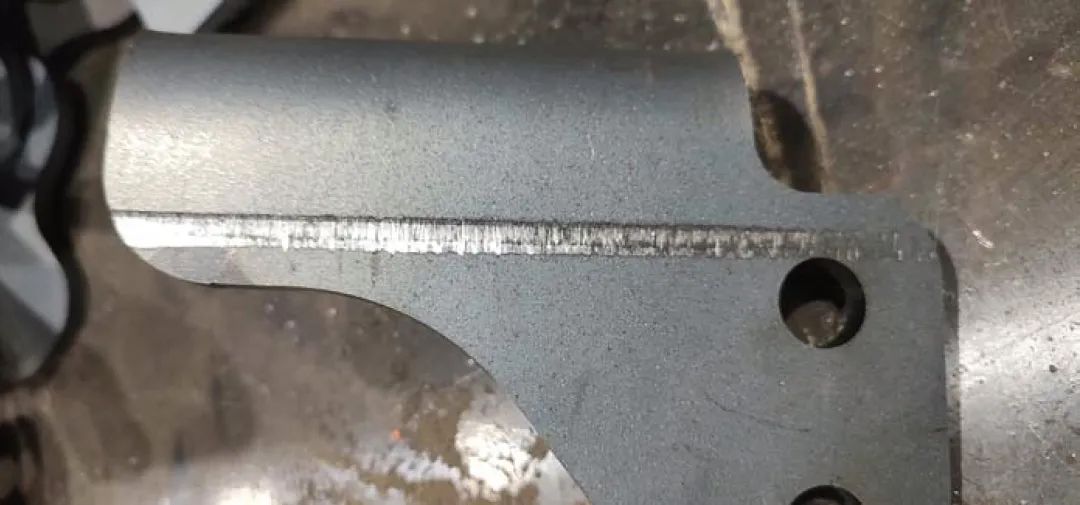
Bending forming process, by the bending machine up and down the tire and equipment pressure effect, will cause sheet metal parts and its contact surface inevitably exists to varying degrees of indentation, as shown in Figure 2. Generally speaking, the surface roughness of sheet metal parts does not have high requirements, minor indentation will not affect the performance of the parts, but if the parts are made of special materials or have high requirements on the appearance of the parts, it is necessary to take effective measures to prevent bending indentation.
Sheet metal bending and forming processing defects in the solution measures
(1)Measures to solve the bending springback
Bending springback should take the following measures:
① bending deformation, the greater the elastic deformation of the plate, the greater the amount of springback caused by bending, so it should be in the bending of the plate before annealing, especially for some materials that have been cold hardening, the need to improve the internal stress organization of the plate, so that the processing of the rebound can be properly resolved.
② Sheet metal bending process after forming, by the elastic deformation of the plate bending parts will be restored, bending inside diameter and angle will increase than the theoretical value, so you can appropriately increase the size of the deformation in the bending process to reduce the rebound.
③ Use a small inner diameter of the upper mold for multiple point bending forming, through multiple bending deformation to reduce or eliminate springback.
(2)Bending cracks in the solution
Bending cracks should take the following measures:
① mold clearance and uniformity of the adjustment, so that the blanking, shear section quality has been improved to ensure that the section is smooth, straight, there will be no burrs and cracks, etc.;
② the direction of raw materials rolled as the basis for the use of nesting software to rationalize scheduling, if the direction of the bending direction is the same direction of the grain and the raw material, the minimum value of its bending radius can be appropriately increased if the direction of the bending and the direction of the grain is perpendicular to the direction of the raw material, the minimum value of bending radius can be appropriately increased if the bending direction and the direction of the raw material grain perpendicular to the minimum bending radius can be appropriately reduced, the direction of the raw material grain and the angle between the bending line should generally be about 60 °, the minimum in the more than 30 °;
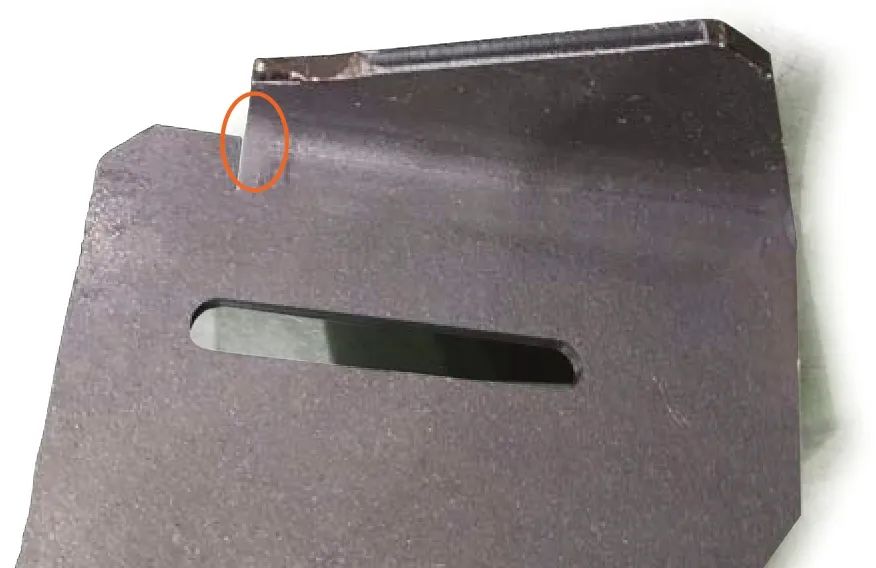
③ multi-channel bending edges of the intersection of the location, where permissible conditions should be arranged to stop cracking holes, and the size of the stop-cracking holes should be greater than or equal to the thickness of the raw material plus the bending inner diameter, the need to add a stop-cracking groove at the right angle of the bending line, the width of the stop-cracking groove generally needs to be increased. Bending line at right angles need to increase the width of the stop crack groove generally need to be greater than 2 times the thickness of the raw material plus bending inner diameter, as shown in Figure 3;
④ according to the requirements of the time node of the bending process equipment for lubrication and maintenance, thereby reducing the resistance to flow.
(3)Bending indentation measures
Bending indentation should take the following measures:
① lengthen the upper mold tire, and increase the radius of the rounded corners of the mold end processing;
② the lower mold tire groove width in the conditions allow an appropriate increase in the internal diameter of the sheet metal after bending and forming, so that the lower mold groove to reduce the extrusion of the workpiece, shown in Figure 4;
③ will be the lower mold designed as a roller-type V-shaped mold, shown in Figure 5, the lower pressure on the upper mold generally Will make the plate to drive the way to rotate, so that the workpiece with the lower mold to maintain full and comprehensive contact between the effective avoidance of bending indentation;
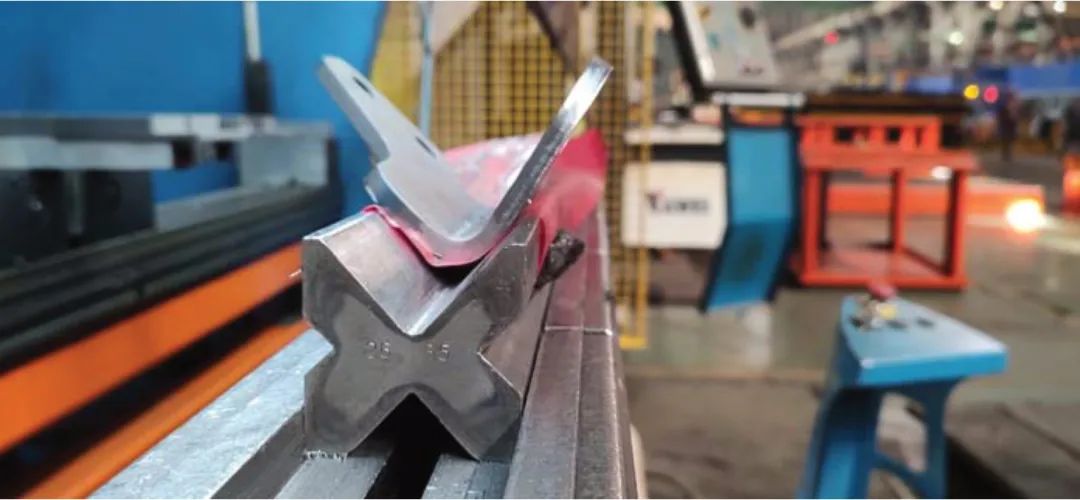
④ in the upper part of the sheet and the lower mold position pad thickness of 0.1 ~ 0.5mm rubber skin or non-indentation film, as shown in Figure 6, to avoid or reduce the bending indentation.