

Specific applications of Sheet metal fabrication in Metal forming Process in the manufacture of aerospace structural components
Introduction of Sheet Metal Forming Processes for Different Types of Aerospace Structural Components
Sheet metal forming process has diversified applications in the manufacturing of aerospace structural components. Different types of aerospace structural components require the selection of corresponding sheet metal forming process according to their functional and morphological characteristics.
(1) Fuselage shell. The fuselage shell is one of the most important structural parts of the aircraft, which is usually manufactured by aluminum alloy sheet metal forming process. Aluminum alloy has excellent strength and lightweight characteristics, and is suitable for manufacturing large structural parts. Through the sheet metal forming process, the aluminum alloy sheet can be made into a fuselage shell that meets the design requirements through shearing, bending, deep drawing and other processing processes, which ensures the strength and stability of the overall structure of the aircraft.
(2) Airfoil. The wing is a key component of the aircraft, mainly bearing the lift and control during flight. Sheet metal forming process plays an important role in the manufacturing of winglets, can be formed by stamping, deep drawing and other processes on aluminum alloy or composite materials, to achieve the complex curved surface structure of the wing, to ensure the aerodynamic performance and strength requirements of the winglets.
(3) Hatch. The hatch is an important channel for aircraft passengers to enter and exit the cabin, usually made of titanium alloy or composite materials for sheet metal forming. Titanium alloy has excellent high temperature and corrosion resistance, and is suitable for hatch and other aerospace structural components that need to withstand high strength and safety requirements. Through the sheet metal forming process, the complex shape and sealing requirements of the hatch can be realized, and the service life and safety of the hatch can be improved.
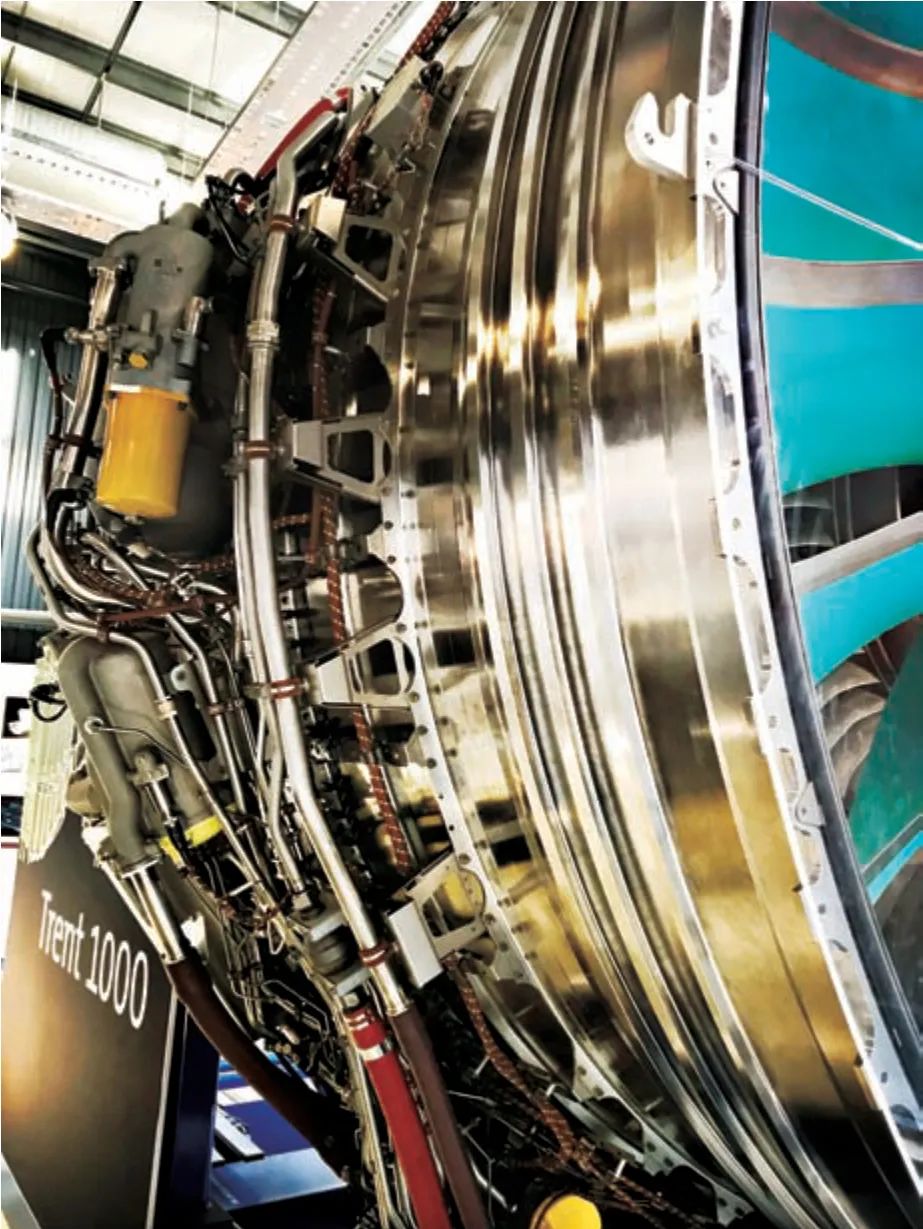
(4) Air intake. Aircraft air intake is located in front of the engine, responsible for the introduction of air to supply the engine combustion, usually made of composite sheet metal molding process. Composite materials have excellent heat resistance and impact resistance, suitable for manufacturing high temperature, high speed wind pressure under the air intake structure. Through the sheet metal forming process, the lightweight design and complex curved structure of the air inlet can be realized to improve the aerodynamic performance of the aircraft. The engine piping system is shown in Fig. 5. The sheet metal forming process can realize the lightweight design and complex curved structure of the air inlet to improve the aerodynamic performance of the aircraft.
Analysis of the impact of sheet metal forming process on the performance of aerospace structural components
(1) Material selection and performance matching. Sheet metal forming process is usually applied to the processing of aluminum alloy, titanium alloy, composite materials and other aviation-specific materials. Through the sheet metal forming process in Metal fabrication, the shape and performance of the material can be effectively regulated to meet the requirements of aerospace structural components in terms of strength, stiffness and corrosion resistance. Correct selection of materials and matching with sheet metal forming process can improve the overall performance of structural components.
(2) Structural optimization design. Sheet metal forming process can realize the forming of complex structural components, through sheet metal forming can realize the lightweight design of structural components, reduce the weight of structural components, and improve the load carrying capacity and fuel efficiency of aircraft. At the same time, sheet metal forming can also realize the aerodynamic optimization design of structural components to improve flight performance and stability.
(3) Forming process impact. Different sheet metal forming processes, including shearing, stamping, bending, deep drawing, etc., will have different degrees of influence on the performance of structural components. For example, metal stamping can realize the forming of complex curved structures, but may introduce problems such as stress concentration; the bending process can improve the strength of structural components, but may lead to material deformation or damage. Therefore, in the choice of forming process needs to be comprehensive consideration of the specific requirements of the structural components, balancing the relationship between performance and process.
(4) Surface treatment and painting. Structural components manufactured using sheet metal forming process need to consider surface treatment and painting during use to improve their corrosion resistance, wear resistance and appearance quality. Appropriate surface treatment can enhance the weather resistance and mechanical properties of structural components, extend service life and improve the overall performance of the aircraft.
(5) System integration and maintainability. The system integration and maintainability of aerospace structural components manufactured by sheet metal forming process in the aircraft are also important factors affecting performance. Reasonable design of the connection and layout of structural components can improve the efficiency of system integration and the overall performance of the aircraft; at the same time, taking into account the ease of maintenance of structural components, it can reduce the maintenance time and cost and improve the reliability of the aircraft.