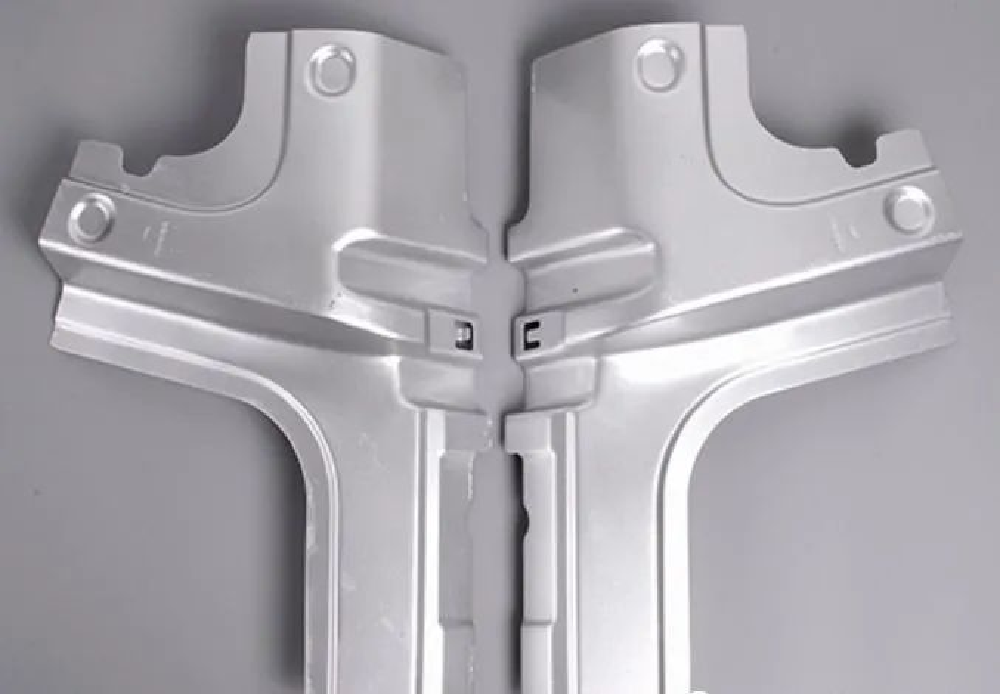
Currently, aluminum alloy automotive sheet materials are widely used by domestic automobile manufacturers. Replacing steel materials with aluminum alloys enables vehicle lightweighting, where a 1% reduction in vehicle weight can save 0.6-1.0% in fuel consumption. However, aluminum alloy automotive sheets are highly prone to mildew formation during processing, transportation, and storage. This defect manifests as randomly distributed pitting on the material surface that cannot be wiped off and requires grinding for removal, severely affecting product quality. This paper first analyzes the causes of mildew formation in aluminum alloy automotive sheets and then discusses control measures.
-
Introduction
By the late 20th century, countries worldwide began imposing new requirements for automotive energy efficiency and environmental performance, sparking a wave of vehicle lightweighting. Among automotive sheet materials, aluminum alloys have become the preferred alternative to traditional steel due to their low density and high strength. China's research and development of aluminum alloy automotive materials started relatively late, constrained by capital barriers and the ultra-high technical requirements of aluminum alloy sheets. Additionally, production faces issues of unstable quality and low output, making domestic manufacturers largely dependent on imports from Japan, Europe, and America. The extended logistics and distribution cycle imposes stringent storage requirements, as improper handling can lead to mildew formation, severely compromising product quality. To address surface mildew on automotive aluminum sheets, control must begin at the material processing stage, with effective preventive measures during transportation and storage. -
Analysis of Mildew Causes in Aluminum Alloy Automotive Sheets
2.1 Causes During Processing
2.1.1 Improper Use of Corrosion Inhibitors and Poor Cooling, Cleaning, and Lubrication
Due to the porous nature of aluminum alloy sheets, incorrect use of corrosion inhibitors or inadequate cooling, cleaning, and lubrication during processing can trigger spontaneous oxidation between aluminum and airborne acids/alkalis, leading to mildew spots. Uncontrolled, this condition worsens, potentially rendering the material unusable or scrapped.
2.1.2 Overheating During Processing Leading to Mildew Corrosion
Overheating during processing causes microstructural heterogeneity in aluminum alloys, promoting intergranular corrosion. During quenching heat treatment, insufficient cooling rates fail to produce a single-phase supersaturated solid solution, degrading mechanical properties and increasing susceptibility to corrosion, ultimately resulting in intergranular corrosion—a form of mildew appearing as an invisible network that weakens grain boundaries and reduces mechanical performance. Such materials pose serious quality risks if used in vehicles.
2.1.3 Residual Emulsion, Oil, or Water Stains on the Surface
Residual emulsion, oil, or water stains on aluminum alloy surfaces can induce mild chemical mildew corrosion under high temperatures. While light corrosion can be removed during pretreatment, severe cases may render the material irreparable. Even without immediate visible corrosion, these residues create latent mildew triggers, increasing susceptibility during subsequent storage, transport, or use.
2.2 External Environmental Causes
2.2.1 Natural Climate Conditions
Aluminum alloy automotive sheets are highly corrosion-sensitive. Exposure to increased airborne pollutants or humid/rainy conditions during transport or storage significantly raises mildew risks.
2.2.2 Transport Conditions
China primarily sources aluminum sheets from overseas manufacturers, subjecting materials to prolonged logistics with high storage demands. Improper transport conditions—such as friction between sheets, surface contaminants, and moisture—can create galvanic cells, accelerating mildew formation.
2.2.3 Storage Conditions
A well-controlled storage environment is critical. Damp or acidic/alkaline-rich settings promote mildew. Unsealed storage allows surface oxidation, forming a porous anodized film that adsorbs corrosive agents, increasing mildew risk. Sealing storage (e.g., via organic coatings or low-temperature methods) can block micropores and mitigate oxidation.
- Mildew Control Measures for Aluminum Alloy Automotive Sheets
3.1 Processing Controls
3.1.1 Effective Use of Cutting Fluids
Cutting fluids act as corrosion inhibitors during processing, providing cooling, cleaning, and lubrication. Key considerations:
- Dilution ratio: 1:10–1:20, using water at appropriate temperatures to avoid gelation.
- pH control: Maintain ~8.5 to ensure inhibitor efficacy.
3.1.2 Preventing Overheating
During quenching, ensure rapid cooling (water temperature <40°C) to achieve a supersaturated solid solution and avoid overheating-induced corrosion.
3.1.3 Eliminating Residual Emulsion, Oil, or Water
Minimize residues by completing artificial aging treatments promptly after processing.
3.1.4 Adding Transition Elements
Alloying with V, Zr, Ti, Cr, or Mn enhances corrosion resistance by forming fine, dispersed precipitates that strengthen grain boundaries.
3.2 Transport and Storage Controls
3.2.1 Protective Packaging
- Requirements: Shockproof, moisture-proof, dustproof, and chemically inert materials (e.g., foam). Prefer individual wrapping before bulk packaging to prevent abrasion.
- Methods: Use air-cushion films, foam plastics, or inflatable/vacuum packaging to block humidity and pollutants.
- Innovation: Develop advanced containers/composites (e.g., multifunctional high-performance materials).
3.2.2 Optimized Storage
- Management: Inspect upon arrival, document batch conditions, and implement regular maintenance.
- Environment: Maintain dry, clean, and fireproof warehouses with organized inventory tracking.
- Sealing Techniques: Apply methods like organic sealing, low-temperature sealing, or chromate sealing based on material specs and local conditions.
- Conclusion
As automakers prioritize eco-friendliness and efficiency, lightweighting via aluminum alloys is key to reducing emissions and improving competitiveness. However, mildew formation during processing and logistics remains a critical challenge. This paper outlines root causes and multi-stage control strategies to safeguard material quality, ensuring reliable performance in automotive applications.