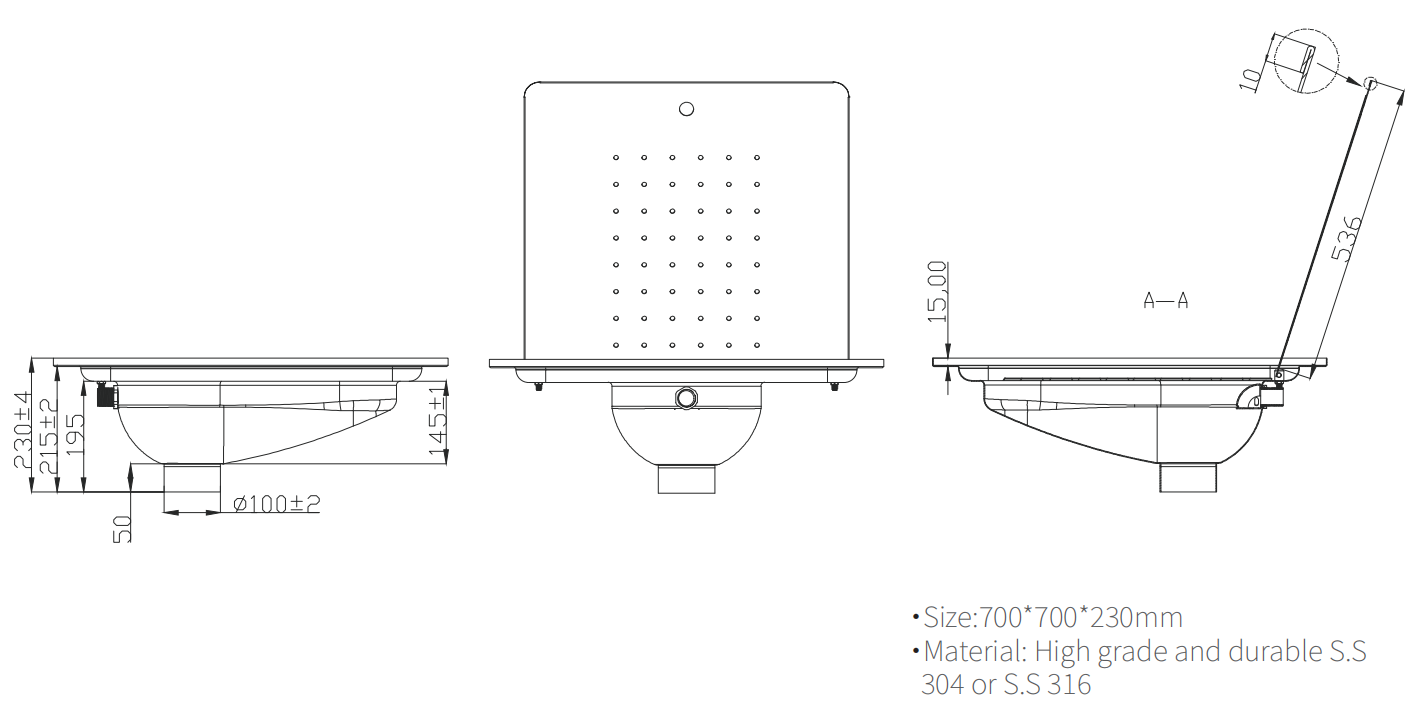
Metal squatting pans (Vacuum Toilet) is a highly efficient and water-saving sanitation device widely used in high-speed trains, airplanes, ships, RVs, and other mobile applications. Unlike traditional gravity-flush toilets, it utilizes vacuum suction technology for rapid waste removal, offering advantages such as low water consumption, strong flushing power, and clog resistance. Below is a detailed guide on proper usage and maintenance.
I. How a Vacuum Squat Toilet Works
Stainless steel squatting toilet relies on a vacuum pump or vacuum generator to create negative pressure (typically -0.5 to -0.8 bar) in the pipeline. When the flush valve opens, waste is swiftly sucked into the drainage system. Key benefits include:
- Water Efficiency: Only 0.5–1.5 liters per flush (vs. 6–12 liters for conventional toilets).
- Gravity-Independent: Ideal for moving vehicles (trains, ships, RVs).
- Odor Control: A vacuum valve prevents gas backflow.
II. Proper Usage Instructions
1. Flushing Operation
- Manual Push-Button Type: Press and hold the flush button for 1–2 seconds (until flushing completes).
- Foot Pedal Type: Step on the pedal and maintain pressure for 2–3 seconds.
- Sensor-Auto Type: Automatically flushes when you step away (no manual action needed).
Important Notes:
- Do not shift your posture during flushing to avoid discomfort from suction force.
- Wait 1–2 seconds after flushing to ensure complete waste removal.
2. Recommended Posture
- Stand evenly on the anti-slip footrests with a slight forward lean.
- Avoid sitting sideways or putting weight on one foot to prevent slipping.
3. Disposal Guidelines
- Flushable Toilet Paper: Use sparingly (vacuum systems have low tolerance for fibers).
- Prohibited Items:
❌ Diapers, wet wipes, sanitary pads
❌ Plastic bags, cigarette butts, or other solid waste
❌ Strong acids/alkalis (can damage seals)
III. Maintenance & Troubleshooting
1. Cleaning Methods
- Surface Cleaning: Wipe with a mild detergent + soft cloth (no steel wool).
- Pipe Maintenance: Pour vacuum toilet cleaner monthly to dissolve residue.
2. Common Issues & Solutions
| Problem | Possible Cause | Solution |
|---|---|---|
| Waste remains after flush | Low vacuum pressure | Check if the vacuum pump is working |
| Flush valve won’t close | Stuck valve / worn seal | Manually reset or replace seal |
| Odor backflow | Faulty vacuum valve seal | Contact service for replacement |
IV. Ideal Applications & Installation Requirements
1. Recommended Uses
- Mobile transport: Trains, planes, ships, RVs.
- Areas without drainage: Construction sites, campsites.
- Water-saving needs: Eco-buildings, public restrooms.
2. Installation Notes
- Requires a vacuum pump system and dedicated waste pipes (≥50mm diameter).
- Pipe slope: 2–3 cm drop per meter to prevent liquid buildup.
V. Comparison with Traditional Squat Toilets
| Feature | Vacuum Squat Toilet | Gravity-Flush Squat Toilet |
|---|---|---|
| Water Usage | 0.5–1.5 L/flush | 6–12 L/flush |
| Flush Speed | Instant suction (<0.5 sec) | Relies on slow water flow |
| Installation | Complex (needs vacuum system) | Simple & cost-effective |
VI. Safety Tips
- Supervise children to prevent misuse.
- If unused for long periods, manually flush weekly to prevent seal damage.