

8. Unusual stripping
① stripper plate and convex die with too tight, stripper plate tilt, isometric screw height is not uniform or other stripper device is not appropriate, should be trimmed stripper, stripper screw using a combination of casing and hexagonal screw form.
② mold clearance is small, the punch in the detachment of the material requires a lot of demolding force, resulting in the punch is bitten by the material, the need to increase the clearance of the lower die.
③ The concave mold has inverted cone, repair the concave mold.
④ The hole of concave mold and the hole of lower mold seat are not correct, repair the hole of leakage.
⑤ Check the condition of the processed material. The material is dirty and adheres to the mold, so that the punch is bitten by the material and can not be processed. The warped and deformed material will clamp the punch after punching. If the warped and deformed material is found, it should be smoothed out and processed again.
⑥ The edge of the punch and the lower die should be sharpened in time. Sharp edge of the mold can process a beautiful cut-off surface, blunt edge, it requires additional punching pressure, and the workpiece section is rough, resulting in a great resistance, resulting in punches by the material bite.
⑦ Appropriate use of beveled edge punches.
⑧ Minimize wear and tear, improve lubrication conditions, lubricate the plate and punch.
⑨ spring or rubber elasticity is not enough or fatigue loss, timely replacement of the spring.
⑩ guide column and guide sleeve clearance is too large, rework or replace the guide column guide sleeve.
Parallelism error accumulation, regrinding assembly.
The hole on the push piece block is not perpendicular, so that the small convex mold deviation, repair or replace the push piece block.
Convex mold or guide pillar installation is not vertical, reassembly to ensure verticality.
9. Bending edge is not straight, size instability
① increase the pressure line or pre-bending process
② material compression force is not enough, increase the compression force
③ convex-concave mold corner wear asymmetry or bending force is not uniform, adjust the convex-concave mold gap to make it uniform, polishing convex-concave mold corner
④the height of the size can not be smaller than the minimum limit size
10. Bending surface extrusion material thinning
①concave die angle is too small, increase the radius of concave die angle.
② Convex-concave die clearance is too small, amend the convex-concave die clearance.
11. Unevenness of the bottom of concave parts
① material itself is not flat, need to level the material
② top plate and material contact area is small or not enough top force, need to adjust the top device, increase the top force
③ There is no ejector device in the concave mold, the ejector device should be increased or corrected.
④ Add shaping process
12. Stainless steel flanging deformation in the manufacture of flanging to the material before the application of high-quality molding lubricant, which can make the material better separated from the mold, in the formation of smooth movement on the surface of the lower die. This gives the material a better chance to distribute the stresses generated by bending and stretching, preventing deformation on the sides of the formed flanges and wear on the bottom of the flanges.
13. Distortion of the material by punching a large number of holes in the material results in poor flatness of the material, which can be caused by the accumulation of punching stresses.
When punching a hole, the material around the hole is stretched downward, causing tensile stresses on the upper surface of the plate to increase, and the downward punching motion also causes compressive stresses on the lower surface of the plate to increase. For punching a small number of holes, the result is not significant, but as the number of holes increases, the tensile and compressive stresses increase exponentially until the material is deformed. One way to eliminate this deformation is to punch every other hole and then return to punching the remaining holes. This produces the same stresses in the sheet, but it breaks up the tensile/compressive stress buildup that occurs when holes are punched in the same direction, one right after the other. In this way, the first batch of holes shares the deformation effect of the second batch of holes.
14. Severe mold wear
①Replace the worn out die guides and punches in a timely manner.
② Check whether the mold clearance is unreasonable (small), increase the clearance of the lower die.
③ Minimize wear and tear, improve lubrication conditions, lubricate the plate and punch.
The amount of oil and the frequency of oil injection depends on the conditions of the processed material. Cold-rolled steel, corrosion-resistant steel and other materials without rust and scale, to the mold oil injection, oil injection points for the guide sleeve, oil injection port, the lower die and so on. Use light machine oil for the oil. Materials with rust and scale, when processing rust micro-powder will be drawn between the punch and the guide sleeve, producing dirt, so that the punch can not slide freely in the guide sleeve, in this case, if the oil, it will make the rust and scale more likely to be stained, so when punching this material, on the contrary, the oil should be wiped clean, decomposed once a month, with gasoline (diesel) oil to the punch, the lower die of the dirt, and then wiped clean before reassembling. This will ensure that the mold has good lubricating properties.
④ Improper sharpening methods, resulting in annealing of the mold, intensifying wear, should use soft abrasive grinding wheels, using a small amount of draft, a sufficient amount of coolant and often clean up the grinding wheel.
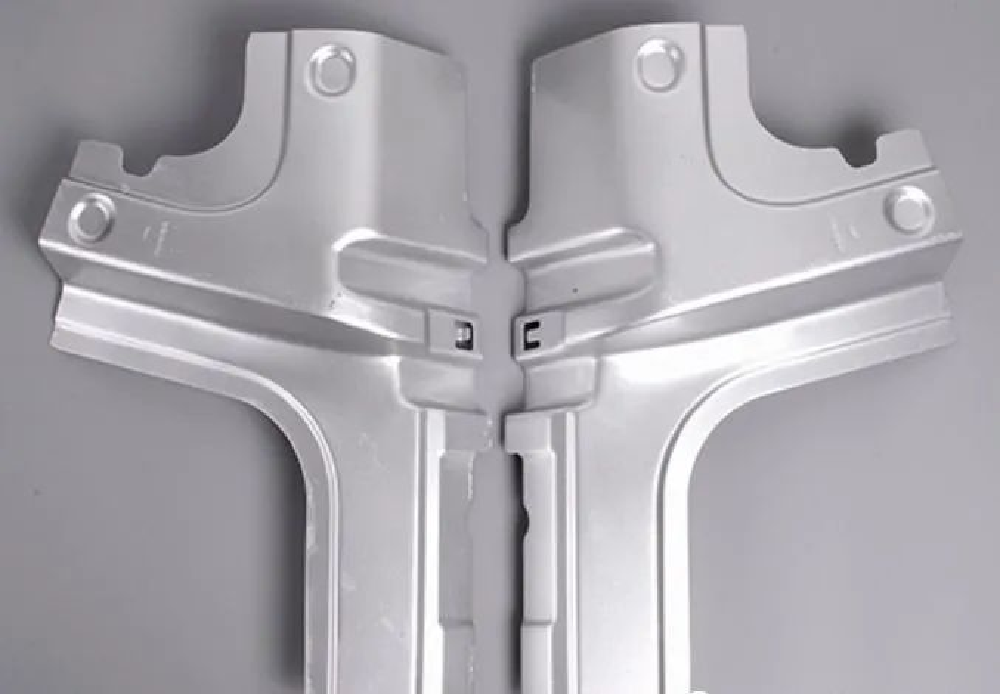
15. Prevent stamping noise punch press is the most critical necessary equipment for the sheet metal processing industry.
Punching machine in the work will produce mechanical transmission noise, stamping noise and aerodynamic noise, the highest value of the noise up to 125dB (A) greatly exceeds the national standard of 85dB (A) and the following noise index requirements, and thus the operation of the workers and the surrounding environment (such as offices, residential areas, meeting rooms, etc.) caused extremely serious harm and pollution. Effective management of the noise has become an urgent problem. Especially the implementation of China's first “Noise Law”, the increasing scale of environmental protection industrialization, and accelerate the urgency of this noise management.
Starting from the punch press noise sources and mold structure, to reduce noise have to pay attention to the following points:
① pay attention to mold maintenance, clean, keep the edge sharp.
② mold edge shape, number, material and punching line length, mold edge and parts contact surface is not too large, punch to do oblique edge step punching, so that the mold in different positions in different depths of cut, the whole process to achieve the real cut off, rather than synchronized extrusion.
③ The edge of the mold must be perpendicular to the installation surface, and the edge of the convex-concave die with a reasonable clearance, unloading difficulties can increase the lower die clearance, increase the unloading force, the use of soft-surface unloading plate and other methods.
④Cooperation precision between each working template, process some exhaust grooves.
⑤ Change the stop plate to small pieces, and change the discharging plate and lower template to insert type to reduce the slamming area.
⑥ stripper plate spring top source changed to T-type top rod, spring mounted on the upper mold seat, isometric sleeve and top rod with, open mold state to ensure that the stripper plate still have a certain amount of free movement.
(7) maintain good lubrication, mold non-interference, smooth.
⑧ upper and lower die seat surface pad aluminum plate to do impulse buffer.
⑨ mold debugging is good, add sound insulation cover or sponge board sound insulation treatment on the punch press.
⑩ to improve the accuracy of the press, reduce structural noise. Installation of cushioning and noise reduction cylinder on the bench, gears using helical gear to strengthen lubrication and gear cover, pneumatic system with muffler.