

1. Before using the punch, you should pay attention to
Clean the punch with a clean rag. ② Check the surface for scratches and dents. If there are, remove them with oil stone. ③Oil the punch in time to prevent rust. ④ Be careful not to have any tilt when installing the punch, use soft material tools such as nylon hammers to knock it gently, and tighten the bolts only after the punch is correctly positioned.
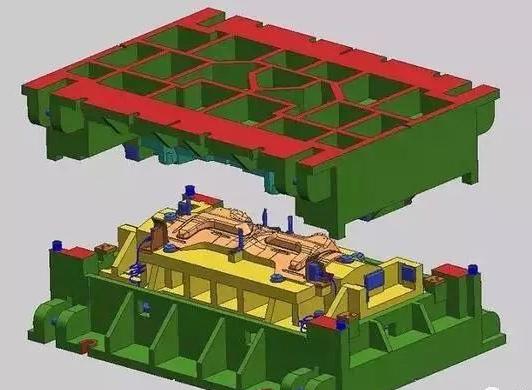
2. Installation and debugging of punching die Installation and debugging of punching die must be especially careful.
Because the die, especially the large and medium-sized die, is not only expensive, but also difficult to move with large weight and trace, the personal safety should always be put in the first place. Infinite device die in the upper and lower die should be added between a cushion board, in the punch press table cleaned up, will be the state of the mold to be tested mold placed on the table in the appropriate position. According to the process documents and die design requirements selected by the press slider stroke, in the mold before moving on the table to the lower dead center and greater than the mold closing height of 10 ~ 15mm position, adjust the slider linkage, move the mold to ensure that the die handle aligned with the die handle holes and to achieve the appropriate height of the clamping die. General blanking die first fixed lower die (not tighten) and then fixed upper die (tighten), pressure plate T-bolts are appropriate to use the appropriate torque wrench to tighten (lower die), to ensure that the same screw bolt has a consistent and ideal preload clamping force. It can effectively prevent the manual tightening of threads due to physical strength, gender, feel the error caused by the preload force is too large or too small, the same thread preload force is not the same, which causes the upper and lower molds in the stamping process, the wrong shift, gap changes, nibbling stripping edge and other failures. Before the die test, fully lubricate the die and prepare the material for normal production, and start the die in the empty stroke for 3 to 5 times to confirm the normal operation of the die before the test punch. Adjust and control the depth of the convex die into the concave die, check and verify the performance and operational flexibility of the die guiding, feeding, pushing and unloading, side pressure and elastic pressure and other institutions and devices, and then make appropriate adjustments to make it reach the best technical state. For large, medium and small punching molds, respectively, test punch 3, 5, 10 pieces of initial inspection for production stoppage, after passing the test punch 10, 15, 30 pieces for re-inspection. After scribing test, punching surface and burr inspection, all dimensions and shape accuracy are in line with the drawing requirements, before delivery to production.
3. Stamping burrs
① mold clearance is too large or uneven, re-adjust the mold clearance.
② mold material and heat treatment is not appropriate, resulting in a concave die inverted cone or edge is not sharp, should be reasonable selection of materials, mold working part of the material with carbide, heat treatment is reasonable.
③ stamping wear, grinding punch or insert.
④ Convex mold into the concave mold is too deep, adjust the depth of the convex mold into the concave mold.
⑤ Guide structure is not precise or improper operation, overhaul the guide pillar and guide bushing in the mold and the guide precision of the punch press, and standardize the operation of the punch press.
4. Waste jumping mold
Larger gap, shorter convex die, influence of material (hardness, brittleness), too high stamping speed, too viscous stamping oil or oil droplets too quickly caused by the adhesion effect, stamping vibration generates chips dispersion, the vacuum adsorption and the core of the die is not sufficiently demagnetized and so on can cause the waste chips to be brought to the surface of the die.
Sharpness of cutting edge. The larger the rounded corner of the edge, the easier it is to cause the waste to bounce, for the thinner material such as stainless steel can be used oblique edge.
② For more regular waste, you can increase the complexity of the waste or add polyurethane top bar on the punch to prevent jumping waste, and add scratches on the edge side of the concave mold.
③ Whether the clearance of the mold is reasonable. Unreasonable die clearance, easy to cause the waste to bounce, for small diameter hole clearance reduced by 10%, diameter greater than 50.00 mm, the clearance is enlarged.
④ Increase the depth of entry mold. Each station mold stamping, the requirements of the amount of die entry is certain, the amount of die entry is small, easy to cause scrap rebound.
⑤ Whether there is oil on the surface of the processed material.
⑥Adjust the stamping speed and the concentration of stamping oil.
⑦ Adopt vacuum adsorption.
⑧ Demagnetize the punches, inserts and materials.
5. Pressure, scratch
① material belt or mold oil, waste chips, resulting in pressure injuries, need to wipe the oil and install automatic air gun to remove waste chips.
② mold surface is not smooth, should improve the mold surface finish.
③ The surface hardness of the parts is not enough, the surface needs to be chromium-plated, carburized, boron infiltration and other treatments.
④ material strain and destabilization, reduce lubrication, increase compressive stress, adjust the spring force.
⑤ Processing of molds for jumping waste materials.
⑥ operation of the product scraped to the mold positioning or other places to cause scratches, the need to modify or reduce the positioning of the mold to educate operators to work gently.
6. Scratch on the outer surface of the workpiece after bending
① raw material surface is not smooth, clean, school plain material.
② molding into the block has waste, remove the waste chips into the block between.
③ molding block is not smooth, the molding block plating, polishing, convex and concave mold to improve the finish.
④ convex mold bending radius R is too small, increase the convex mold bending radius.
⑤ mold bending clearance is too small, adjust the upper and lower mold bending clearance.
⑥ Concave die forming block with roller molding.
7. Leakage of punched holes
Leakage of punched holes, generally have a punch broken not found, after repairing the mold leakage of punches, punches sinking and other factors caused by the repair of the mold should be carried out after the first piece of confirmation, comparison with the sample, check whether there is a leakage phenomenon, on the sinking of punches, should be to improve the hardness of the upper die pad.