

Metal forming includes many processes, such as sheet metal fabrication , deep drawing, metal stamping and so on, and among these processes, stainless steel is the most commonly used material because of its corrosion resistance, however, under certain conditions, stainless steel will also rust.
When the surface of the stainless steel tube brown rust spots (points), people are surprised: that “stainless steel is not rust, rust is not stainless steel, may be a problem with the quality of steel”. In fact, this is a lack of understanding of stainless steel, a one-sided view of the error. Stainless steel will rust under certain conditions.
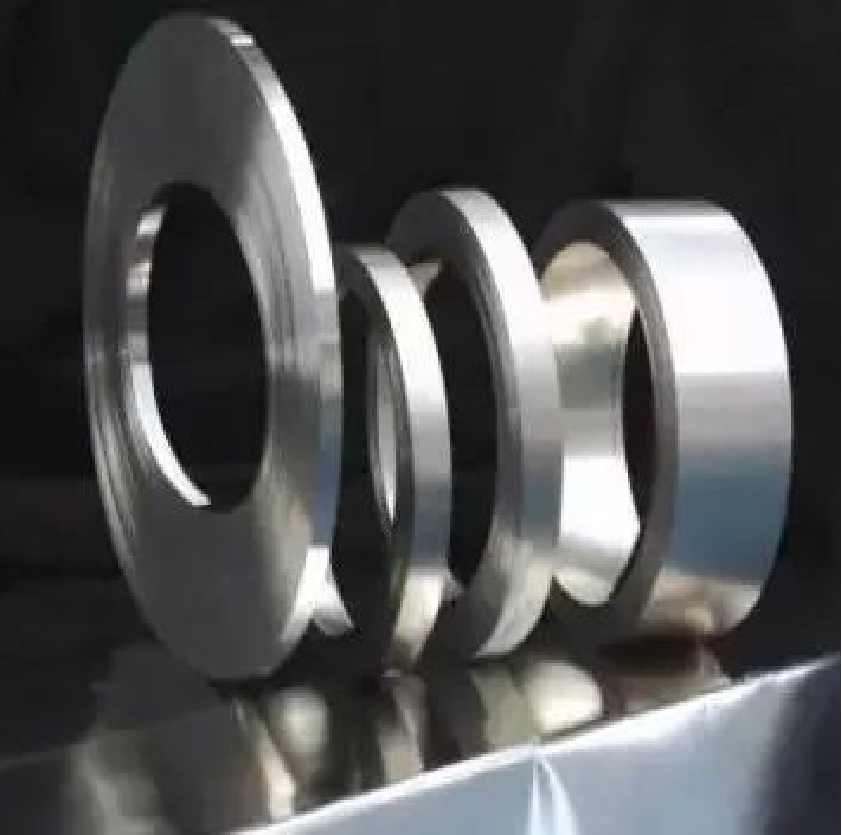
Stainless steel has the ability to resist atmospheric oxidation - that is, stainless steel, but also in the medium containing acid, alkali, salt and the ability to corrode - that is, corrosion resistance. But the size of its corrosion resistance is with the chemical composition of its steel itself, plus mutual state, the use of conditions and the type of environmental media and change. Such as 304 steel pipe, in the dry and clean atmosphere, there is absolutely excellent corrosion resistance, but it will be moved to the seaside areas, in the sea spray containing a large amount of salt, will soon rust; and 316 steel pipe is good performance. Therefore, not any kind of stainless steel, in any environment can resist corrosion, not rust.
Surface film is damaged in many forms, daily life in the following kinds: stainless steel is relying on its surface to form a layer of very thin and solid dense stable chromium-rich oxide film (protective film), to prevent oxygen atoms continue to penetrate, continue to oxidize, and obtain the ability to resist rust and corrosion. Once there is some reason, this film has been constantly damaged, air or liquid oxygen atoms will continue to penetrate or metal iron atoms continue to separate out, the formation of loose iron oxide, the metal surface is also subject to constant corrosion. This surface film is damaged in many forms, the following are common in daily life:
1. Stainless steel surface deposits containing other metal elements of dust or dissimilar metal particles of adhesion, in the humid air, adhesion and stainless steel condensation, will be connected to a microcell, triggering an electrochemical reaction, the protective film is damaged, known as electrochemical corrosion.
2. Stainless steel surface adhesion of organic sap (such as vegetables, noodle soup, phlegm, etc.), in the presence of water and oxygen, constitutes organic acid, long time organic acid corrosion of the metal surface.
3. Stainless steel surface adhesion containing acids, alkalis, salts (such as the decoration of the wall of alkaline water, lime water splash), causing localized corrosion.
4. In the polluted air (such as the atmosphere containing a large number of sulfides, carbon oxides, nitrogen oxides), meet condensation, the formation of sulfuric acid, nitric acid, acetic acid liquid point, causing chemical corrosion.
In order to ensure that the metal surface is permanently bright, not rust, we recommend: the above circumstances can cause the destruction of the stainless steel surface protective film triggered by rust. Therefore, in order to ensure that the metal surface is permanently bright, not rust, we recommend:
1. must be often on the decorative stainless steel surface cleaning scrub, remove adhesions, eliminate the external factors that trigger modification.
2. Seaside areas should use 316 stainless steel, 316 material can resist seawater corrosion.
3. Some stainless steel tube chemical composition on the market can not meet the corresponding national standards, less than 304 material requirements. Therefore, it will also cause rust, which requires users to carefully select the products of reputable manufacturers.
Stainless steel will also be magnetized? People often think that the magnet adsorption of stainless steel, to verify its strengths and weaknesses and authenticity, do not suck non-magnetic, that is good, the real thing; suckers have magnetic, it is considered to be counterfeit fake. In fact, this is an extremely one-sided, not practical and wrong identification method.
There are many kinds of stainless steel, at room temperature according to the organizational structure can be divided into several categories:
1. Austenitic: such as 201, 202, 301, 304, 316 and so on;
2. Martensitic or ferritic type: such as 430, 420, 410 and so on;
Austenitic type is non-magnetic or weakly magnetic, martensitic or ferritic is magnetic. Usually used as decorative pipe plate stainless steel most of the austenitic type 304 material, generally speaking, is non-magnetic or weakly magnetic, but due to smelting caused by fluctuations in chemical composition or processing state may also appear magnetic, but this can not be regarded as impostor or unqualified, this is what is the reason for it?
It is mentioned above that austenite is non-magnetic or weakly magnetic, and martensite or ferrite is magnetic, due to smelting composition segregation or improper heat treatment, will cause austenite 304 stainless steel in a small amount of martensite or ferrite organization. In this way, 304 stainless steel will have a weak magnetism.
In addition, 304 stainless steel after cold working, the organizational structure will also be transformed to martensite, the greater the degree of cold working deformation, the more martensite transformation, the greater the magnetic properties of steel. As a batch number of steel strip, the production of Φ76 pipe, no obvious magnetic sensation, the production of Φ9.5 pipe. Because of the deformation of bending larger magnetic sense will be obvious, the production of square rectangular pipe because the deformation is larger than the round pipe, especially the corner part, the deformation is more intense magnetic more obvious. To completely eliminate the magnetic properties of 304 steel caused by the above reasons, through high-temperature solution treatment to restore stable austenitic organization, thereby eliminating the magnetic properties. In particular, the magnetic properties of 304 stainless steel caused by the above reasons, and other materials of stainless steel, such as 430, carbon steel magnetic properties are not the same level, that is to say, the magnetic properties of 304 steel is always shown as a weak magnetic properties. This tells us that if the stainless steel with weak magnetism or completely non-magnetic, should be identified as 304 or 316 materials; if the same with the carbon steel magnetism, showing strong magnetism, due to the judgment is not 304 materials.