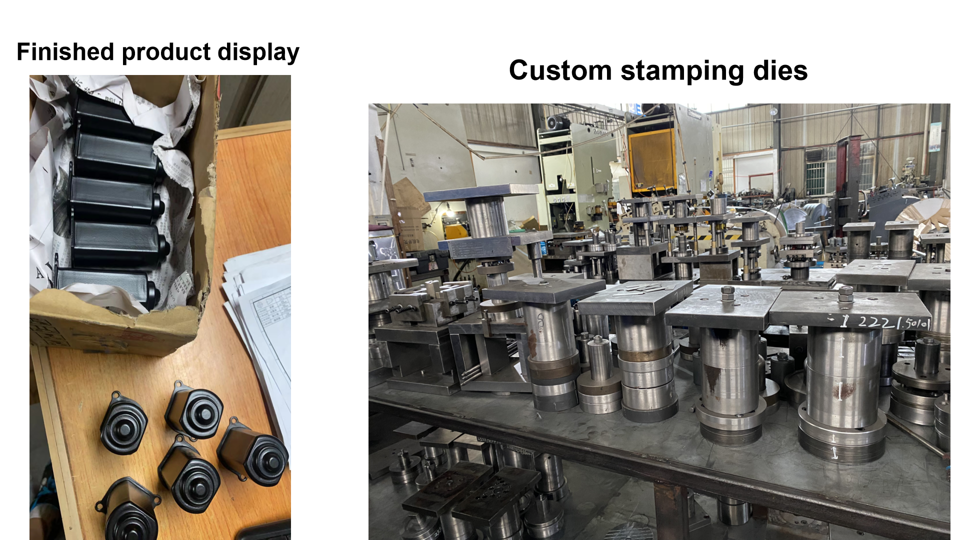
To do a good job of continuous stamping die, you need to start from the design, manufacture, debugging and maintenance of a number of links to ensure die accuracy, life and productivity. The following are the key steps and considerations:
1. Design phase
- Product analysis: fully understand the product shape, size, material properties and precision requirements to ensure that the mold design meets the needs.
- Process planning: Reasonable planning of stamping processes, such as punching, dropping, bending, etc., to ensure a reasonable sequence of processes and reduce material waste.
- Material selection: according to the product material and production volume, select wear-resistant, high-strength mold materials, such as Cr12, SKD11, etc..
- Structural design: Ensure the mold structure is compact and rigid, avoid deformation and vibration. Consider guiding, positioning, unloading and other mechanisms when designing to ensure stability and precision.
- Gap control: Reasonably set the gap between the convex mold and concave mold, too large a gap will affect the accuracy, too small will increase wear.
2. Manufacturing stage
- Machining accuracy: ensure the machining accuracy of the mold parts, especially the key parts such as convex die, concave die, guide parts, etc., the accuracy is usually required within ± 0.01mm.
- Heat treatment: Heat treatment of key parts to improve the hardness and wear resistance and extend the life of the mold.
- Surface treatment: Polishing and chrome plating on the surface of the mold to reduce the coefficient of friction and abrasion.
- Assembly and debugging: Make sure the parts are assembled in place, the guiding mechanism is flexible and the gap is even to avoid jamming or skewing.
3. Commissioning stage
- Mould test: carry out mould test before official production, check whether the product size and surface quality meet the requirements, and adjust the mould in time.
- Adjustment of clearance: Adjust the clearance between the convex and concave molds according to the results of the trial mold to ensure product quality.
- Optimize the process: optimize the stamping speed, pressure and other parameters according to the trial mold situation to ensure stable production.
4. Maintenance and upkeep
- Regular inspection: Regularly check the wear and tear of the mold, and replace or repair the parts with serious wear and tear in time.
- Lubrication and maintenance: Regularly lubricate the molds to reduce friction and wear and prolong the life.
- Cleaning and rust prevention: Keep the mold clean to prevent rusting, and apply anti-rust oil when storing.
5. Production Management
- Operation specification: Ensure the operators are familiar with the specification of using the molds to avoid damage caused by misoperation.
- Production monitoring: real-time monitoring of the production process, find anomalies in time to deal with, to avoid damage to the mold or product quality problems.
6. Continuous improvement
- Feedback optimization: according to the production feedback, continuous optimization of mold design and process, improve efficiency and quality.
- Technology update: pay attention to the industry's new technology and new materials to improve the performance of the mold.
Doing a good job of continuous stamping die requires comprehensive consideration of design, manufacturing, commissioning and maintenance to ensure die accuracy, life and production efficiency. Through reasonable design, precision processing, strict debugging and regular maintenance to ensure the long-term stable operation of the mold.