Introduction:In the field of metal processing, deep drawing process is a common forming method, which is widely used in the production of various products. However, some problems often occur in the deep drawing process, affecting product quality. In this paper, we will analyze the common problems of deep-drawing products, and put forward the corresponding solution strategies.
First, deep-drawing products common problems
1. wrinkle
Wrinkling is one of the most common problems in the deep drawing process, mainly manifested as uneven folding or bulging of the material in the stretching process. Wrinkles will lead to unqualified appearance of the product, and even affect the use of performance in serious cases.
2. Rupture
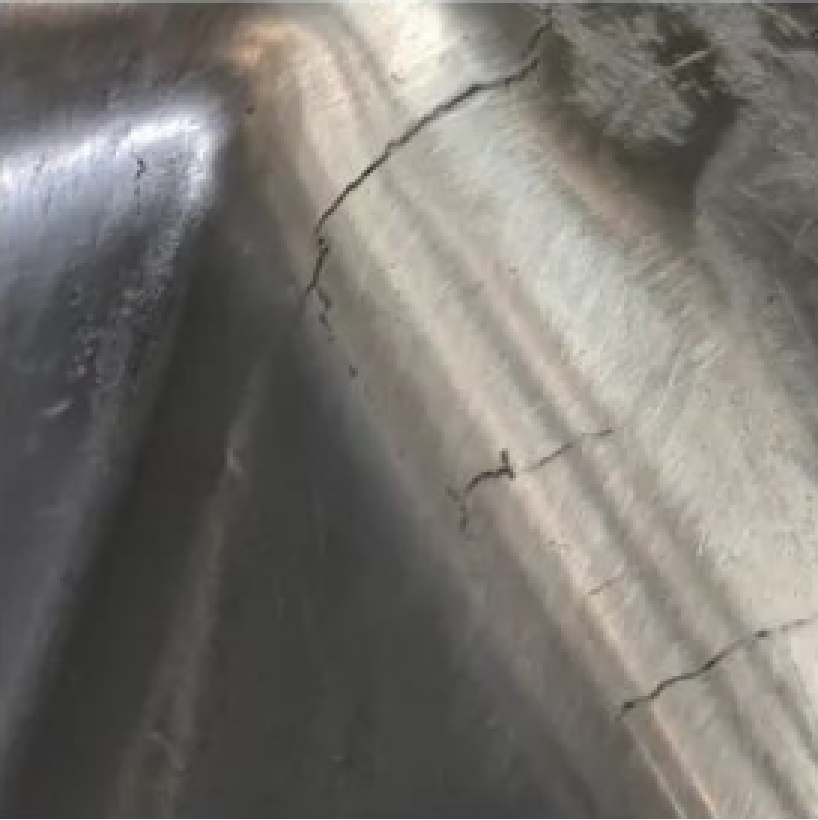
Rupture refers to the process of deep drawing, the material due to excessive force and fracture phenomenon. Rupture will lead to product scrap, reduce production efficiency.
3. Dimensional deviation
Dimensional deviation refers to the size of the deep-drawing product does not match the design requirements. Dimensional deviation will affect the assembly and performance of the product.
4. Surface scratches
Surface scratches are scratches on the surface of the product due to the roughness of the mold or material surface in the deep drawing process. Surface scratches will affect the appearance of the product quality.
5. Sticky mold
Sticky mold refers to the material in the deep-drawing process and mold adhesion, resulting in product surface scratches or strains. Sticky mold will affect the appearance and performance of the product.
Problem analysis
1. Mold design is unreasonable
Mold design is a key factor affecting the quality of deep drawing products. If the mold design is unreasonable, it may lead to uneven material flow, stress concentration and other problems, which will lead to wrinkles, rupture and other phenomena.
2. Unstable material properties
Unstable material properties will lead to uneven force in the deep-drawing process, resulting in a variety of problems. Such as material strength is too high, plasticity is not enough, easy to lead to rupture; material surface quality is poor, easy to produce sticky mold and surface scratches.
3. Poor lubrication conditions
Lubrication conditions have a great influence on the deep drawing process. Poor lubrication will lead to increased friction, so that the material flow is not uniform, easy to produce wrinkles, rupture and other problems.
4. Production process is unreasonable
Production process is unreasonable, such as stretching speed is too fast, stretching stroke is not appropriate, etc., will also lead to deep drawing product problems.
Third, the solution strategy
1. Optimization of mold design
According to the product structure and material properties, the reasonable design of the mold structure, so that the material flow is uniform, reduce stress concentration. At the same time, the use of appropriate mold surface treatment technology to improve the surface quality of the mold.
2. Selection of suitable materials
Selection of stable performance, in line with the deep-drawing requirements of the material, to ensure that the material has good plasticity and strength. For special requirements of the product, can choose alloy materials or surface treatment.
3. Improve the lubrication conditions
Choose suitable lubricant, ensure that the lubricant evenly coated in the mold and material surface. Adjust the concentration and application amount of the lubricant to reduce friction.
4. Optimize the production process
According to the product characteristics, adjust the drawing speed, drawing stroke and other parameters to make the deep drawing process more stable. Strengthen the production process monitoring, timely detection of problems and take measures.
Summarize
The solution to the problem of deep-drawing products needs to be considered comprehensively from the mold design, material selection, lubrication conditions and production process. Through continuous optimization and improvement, improve the quality of deep drawing products and production efficiency, to create greater value for the enterprise.